Between May 15 and May 20, 2026, Prime Minister Narendra Modi undertook a five-nation foreign visit that began in Abu Dhabi, continued to The Hague, then Gothenburg, then Oslo for the Nordic Summit, and concluded in Rome, Italy, for a landmark bilateral with Giorgia Meloni. The itinerary was dense, the optics were professionally managed, and the media output from the Ministry of External Affairs and government-aligned outlets was relentless.
What did India actually get from the tour? And what did it cost?
The UAE Stop
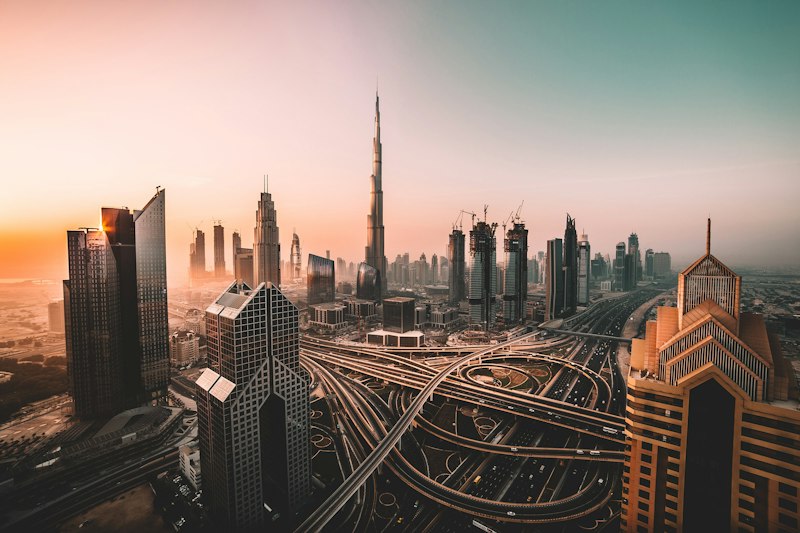
Modi visited Abu Dhabi on June 9, meeting UAE President Sheikh Mohamed bin Zayed Al Nahyan. The bilateral was characterised by both governments as a strengthening of the Comprehensive Strategic Partnership, which was elevated to that level during Modi's previous UAE visit in 2022. The announced deliverables included: expansion of the UAE-India bilateral investment target (no specific figure given in official readouts), progress on the Rupee-Dirham trade settlement mechanism (which has moved slowly since its announcement in 2022), and the inauguration of the first Hindu temple in Abu Dhabi, BAPS Swaminarayan Mandir.
The temple inauguration generated by far the most Indian media coverage. It was framed both as a statement of India's soft power and as a vindication of the government's outreach to the Indian diaspora in the Gulf. The diplomatic substance — trade and investment targets — received secondary billing.
The Netherlands
The Hague stop had specific strategic significance: the Netherlands is home to ASML, the world's only manufacturer of extreme ultraviolet lithography machines, the single chokepoint in global semiconductor supply chains. India's semiconductor ambitions — articulated through the India Semiconductor Mission, with ₹76,000 crore in incentives — require access to the most advanced chip-making equipment. ASML equipment, or access to the supply chains it anchors, is a prerequisite for any credible Indian semiconductor fabrication industry.
Official readouts were careful not to make specific claims about ASML access — that is a politically sensitive topic given US export controls. But the visit signalled that India's semiconductor ambitions are being communicated at the highest diplomatic level with the countries that matter most to their realisation.
Italy and the G7
The G7 stop is covered separately. In aggregate, the three-country tour produced: one strategic partnership upgrade (India-Italy), multiple joint statements, one viral candy photograph, approximately forty bilateral meetings, and a significant volume of ministerial-level follow-on action items.
The Cost Question
The Indian government does not publish per-trip costs for Prime Ministerial foreign visits. Air India One — the two Boeing 777-300ER aircraft acquired specifically for head-of-state travel — operates at an estimated ₹8–12 lakh per flight hour, based on comparable aircraft operating costs. A multi-leg, multi-nation tour of this duration would involve dozens of flight hours, advance team travel, security deployment, and accommodation costs that are not disclosed.
Previous RTI responses on foreign visit costs have either been rejected on national security grounds or have produced figures that transparency advocates have challenged as incomplete. The full cost of Indian Prime Ministerial diplomacy, including the infrastructure that supports it, remains publicly unverifiable.
What is verifiable is that the diplomatic infrastructure exists, is used intensively, and produces outcomes that are unevenly converted into tangible deliverables. The ASML question, the Rupee-Dirham settlement, the India-Italy defence cooperation — these are the threads worth pulling. The candy photograph tells you what the communications department wants you to see. The Hague stop tells you what the government actually needs.